Top placement
Grand Prize
$25,000 investment from the Berkeley SkyDeck Fund, $2,500 OpenAI credits, and a Pad-13 incubator Golden Ticket.
Case study · June 2024
DispatchAI answers 911 calls instantly, calibrates its tone to the caller's emotion, extracts location and severity in real time, and packages every incident for a human dispatcher in a live operator console. Built in 36 hours at the UC Berkeley AI Hackathon — and it won.
Empathetic, technically deep, and the judges felt the demo could plausibly help real dispatchers tomorrow morning. That combination is what won the room.
Built in
36 h
Stack lines
≈ 6.4k
Open source
Model + data
At the UC Berkeley AI Hackathon (June 22–23, 2024), DispatchAI took the room. 930 builders, 293 submissions, organized by Cal Hacks and Berkeley SkyDeck.
Grand Prize
$25,000 investment from the Berkeley SkyDeck Fund, $2,500 OpenAI credits, and a Pad-13 incubator Golden Ticket.
Best Use of Intel AI
Recognized for fine-tuning Mistral-7B on the Intel Dev Cloud and using IPEX to take inference from 2:53 to under 10 seconds.
930 builders
293 submissions over 36 hours at the UC Berkeley AI Hackathon, organized by Cal Hacks and Berkeley SkyDeck.
SkyDeck Pad-13
Golden Ticket admission to Berkeley SkyDeck's accelerator program, awarded as part of the grand prize package.
Peak-load 911 centres routinely run minute-plus pickup queues. The agent in distress hears hold music. The dispatcher, two callers in, has no context. We wanted to fill that gap without removing the human from the chain.
60s+
Average 911 wait time during peak demand in major US cities, per dispatcher field reports.
50%
Of calls reportedly involve information that could be triaged or pre-filled before a human picks up.
1
Human dispatcher per call — protected. The AI fills wait time, never replaces final authority.
Incident queue, severity-coded map pins, live transcript, caller emotion, and street view assembled from a single FastAPI orchestrator.
Hume EVI emotion telemetry feeds the LLM context window so the agent's wording calibrates to the caller's distress, not just their words.
Every action surfaces with provenance and confidence. Transfer is gated to a human dispatcher; the AI never closes the loop alone.
Watch the submission video the team showed the panel. Same flow, same UI, same model — recorded the morning of judging.
The voice loop is real-time. The model loop is async with confidence scores. The operator surface is a Next.js cockpit polling /api/calls every 5 seconds and merging server state with the active session.
The team curated 911 call transcripts, fine-tuned with PEFT/LoRA, and ran inference on an Intel Data Center GPU Max 1100 using the Intel Extension for PyTorch. Both the model and a public snapshot of the dataset are open-sourced under MIT.
Before
2:53
per response
After IPEX
<10s
same hardware tier
Reported in the team's submission: applying the Intel Extension for PyTorch to a Mistral-7B LoRA fine-tune collapsed per-response latency by an order of magnitude on the same Intel Data Center GPU Max 1100 tier — the work that earned Best Use of Intel AI.
Open-sourced
A non-interactive replica below renders against the same seeded incidents the live system uses for demo onboarding. Click an incident on the left to see the dossier, transcript and emotion update.
Selected incident
Earthquake Emergency at Golden Gate Bridge
37.8199, -122.4786
Want the real thing?
The live console wires up Clerk auth, the Retell voice loop, and Cloud Run polling.
Roles and contributions reproduced from the team's submission and follow-up posts. This portfolio belongs to one of the four — flagged below.

Human-AI interfaces · Backend · UX
Started the project and solo-pitched the finalist demo to judges. Fine-tuned Mistral on real 911 transcripts, built the voice backend, and shaped the human-AI handoff working with real dispatchers.
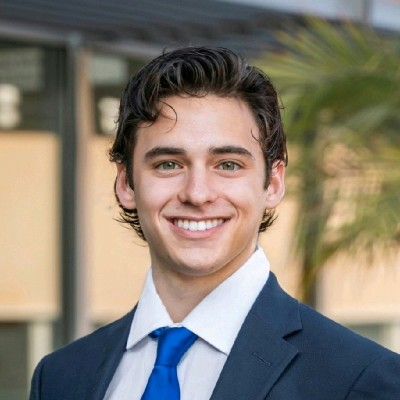
Machine learning · Backend
@spikecodes
Led ML and backend. Integrated Hume EVI for emotion, Twilio for telephony, and built the extraction + evaluation pipelines. Ran the LoRA fine-tune on Intel Dev Cloud and authored the open-sourced model and dataset on Hugging Face.
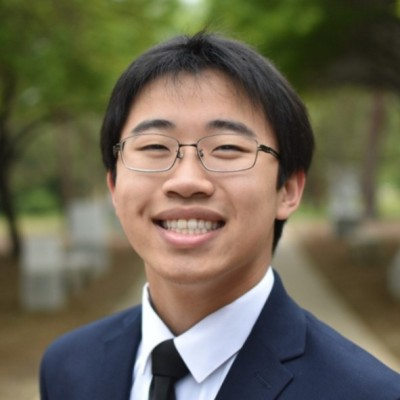
Frontend · UX · Product
Owned the operator dashboard end-to-end. Built the real-time interactive cockpit in Next.js + TailwindCSS with a focus on calm, dispatcher-grade interactions under load.

Conversational AI · Voice agent
Built the conversational layer and the voice agent runtime. Integrated the LLM into the live call loop and stitched the real-time interactive cockpit you are reading this on.
Public-safety AI without an explicit limits page is a red flag. Here are the four most relevant ones.
Caveat
The public training snapshot has 518 transcripts. We ship the model and the dataset openly so it can be audited and grown — not as a finished product.
Caveat
Accents, dialects, and cultural variation in distress aren't represented uniformly in 518 transcripts or in Hume's emotion model. Any production deployment requires demographic-stratified evals first.
Caveat
The system is explicitly assist-only. Recommendations carry a confidence score; the dispatcher accepts, edits, or rejects. No outbound dispatch is initiated by the AI.
Caveat
PSAPs need NENA / CJIS / SOC 2 alignment, integrations with legacy CAD and i3 NG911, and 6–18 month sales cycles. The hackathon build was deliberately scoped as a credible prototype, not a shipping product.
GitHub, Devpost, Hugging Face, YouTube, Figma, and the original Vercel deployment. Recruiters — click through; nothing is hand-waved.
Try it
Sign in (Clerk), add a phone number for the Retell voice agent to call, and the cockpit opens with the seeded incidents merged into live polling.
Sources
This portfolio cut maintained by Bill Zhang · Original build summer 2024